 Sales@csdj.com.cn
 +86-0731-89758601

-
About Us
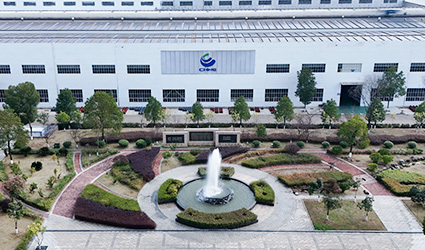
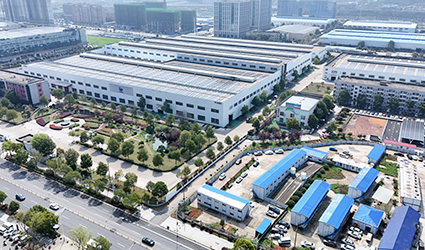
Changsha changli Electric Co., Ltd. is a joint-stock enterprise established in March 2016 after the deepening reform of Changsha Electric Machinery Co., Ltd., and the former motor development and manufacturing industry of Changsha Electric Machinery Co., Ltd.
-
Product Center
Changsha changli Electric Co., Ltd. is a joint-stock enterprise established in March 2016 after the deepening reform of Changsha Electric Machinery Co., Ltd., and the former motor development and manufacturing industry of Changsha Electric Machinery Co., Ltd.
-

News Center
Changsha changli Electric Co., Ltd. is a joint-stock enterprise established in March 2016 after the deepening reform of Changsha Electric Machinery Co., Ltd., and the former motor development and manufacturing industry of Changsha Electric Machinery Co., Ltd.
-
Business Scope
Changsha changli Electric Co., Ltd. is a joint-stock enterprise established in March 2016 after the deepening reform of Changsha Electric Machinery Co., Ltd., and the former motor development and manufacturing industry of Changsha Electric Machinery Co., Ltd.
-
Service
Changsha changli Electric Co., Ltd. is a joint-stock enterprise established in March 2016 after the deepening reform of Changsha Electric Machinery Co., Ltd., and the former motor development and manufacturing industry of Changsha Electric Machinery Co., Ltd.
-
Contact Us
Changsha changli Electric Co., Ltd. is a joint-stock enterprise established in March 2016 after the deepening reform of Changsha Electric Machinery Co., Ltd., and the former motor development and manufacturing industry of Changsha Electric Machinery Co., Ltd.

China's manufacturing industry by internal and external shocks, how to break through the motor industry?
Time:
18 Apr,2018
The scale of China's manufacturing industry has leapt to the first in the world, has the most complete industrial system in the world, and has become an important participant in the global value chain. However, in recent years, China's manufacturing industry has been affected by various shocks and is in dire straits: the "manufacturing return" in the United States in recent years has become more persuasive after Trump took office; the low labor cost in Southeast Asia and other countries has attracted more and more foundry factories to move out of China; the heavy tax burden and high cost have made it difficult for the manufacturing industry to breathe.
As a member of the traditional manufacturing industry, the motor is also affected by various external pressures and internal factors. In the face of multiple internal and external shocks, how should motor companies break through?
Is the return of American manufacturing a false proposition?
From Obama to Trump, they have always claimed to "return manufacturing", but according to the People's Daily, it is impossible for the United States to return its blue-collar workers to the assembly line. Regardless of the production volume and chain integrity, Asian manufacturing The industry is a leader in the world.
Indeed, in Trump's campaign platform, the most played is the manufacturing card, and the reason is more to cater to the dissatisfaction of the blue-collar class in the United States with the outflow of American manufacturing.
In 1950, the US manufacturing industry accounted for 40% of the global manufacturing industry, and the US manufacturing industry accounted for more than 30% of GDP. Now, the US manufacturing industry accounts for less than 19% of the global manufacturing industry, accounting for only about 13% of the US GDP, and the employment created accounts for less than 10% of the total employment.
Indeed, in terms of manufacturing, the United States has gradually lost most of its markets: home appliances, electronics, automobiles, shipbuilding, etc., occupied by Japan, South Korea, China, etc., and steel is a sunset industry; the Internet, computer hardware, and mobile phone Most of the production is concentrated in China; now even wind power, solar energy, flat panel displays, and LED research and development and production are gradually disappearing.
However, the United States has never abandoned its high-end manufacturing industry. Even if it is surpassed by China, the United States is still the second largest manufacturing country in the world.
So the return of U.S. manufacturing can only be a return to low-end manufacturing. If we return to low-end manufacturing, workers in developing countries are no longer interested in low-level repetitive work, and American workers will certainly not be interested in it. Moreover, due to the high labor costs in the United States and the high wages in exchange for low-value products, American companies may not necessarily do it. Data show that as of December 31, 2016, the number of unemployed people in the United States has reached 7.5 million, and at the same time, there are still 5.5 million jobs in the United States that cannot be recruited.
However, it may not be so convincing to veto the "manufacturing return" of the United States only on the basis of high labor costs and reduced labor.
Because many companies in the United States have begun to apply robotics on a large scale to cope with the crisis of high labor costs and reduced labor population, and to ensure that American companies have a high level of productivity. Tesla's car factory is a typical example of the extensive use of robot technology to improve efficiency and reduce costs, thus keeping the production line in the United States.
Therefore, although Trump's "manufacturing return" cannot bring back more manufacturing jobs, if American companies introduce automated production lines on a large scale to reduce labor costs, China's manufacturing industry will no longer be competitive. After all, in terms of logistics, energy, land, economic environment, taxation, etc., China's cost pressure is far greater than that of the United States.
Of course, although the U.S. manufacturing industry can return to a part, most of it is difficult to recover. There is no precedent for the re-industrialization of de-industrialized countries. In fact, the most internationally competitive areas of the United States are still service sectors such as finance and technology research and development, and the United States has long maintained its position as the world's largest service exporter.
The Southeast Asian countries?
Undoubtedly, the return of US manufacturing will not, but to a certain extent, it will have an impact on China's manufacturing industry. However, the impact of China's manufacturing industry is not only this, high labor costs and low production efficiency is the biggest crisis of China's manufacturing industry.
Willis Towers Watson Management Consulting pointed out in a recent survey report that compared with Southeast Asian countries such as Vietnam and the Philippines, China's labor wages are too high, almost twice that of these Southeast Asian countries. The low labor cost advantage that China's manufacturing industry relied on for survival has disappeared.
Therefore, the production chain of China's manufacturing industry will shift to a certain extent due to the rise in labor prices, but most of them will not be transferred to the United States, but to India, Vietnam, Myanmar, Cambodia and other countries. For example, Samsung, Intel and LG have moved their factories to Vietnam. Foxconn, Xiaomi, OPPO and others have set up factories in India.
However, some people believe that China's rising labor costs are the result of industrial upgrading. The wages paid are no longer attractive to workers and should naturally be phased out to less developed countries. At present, all the products made in China are low-end products with low profits and no core technology. What China has to take is a difficult road of transformation to eliminate backward production capacity and turn to medium and high-end manufacturing.
Indeed, China's current development goal in manufacturing is to catch up with Germany and Japan, but who can guarantee that our mid-end manufacturing industry has not caught up with the level of Germany, Japan and other countries, and the low-end manufacturing industry has been India and Southeast Asia. Other countries catch up?
And the problem is not limited to the high labor cost. Because the manufacturing industry is a technology and skill-intensive industry, the skills and scientific literacy of the labor force are very important to enterprises, so the recruitment difficulty of the manufacturing industry is better than that of other industries.
Fortunately, while other countries are revitalizing the manufacturing industry, China is also vigorously promoting and implementing the strategy of manufacturing power. The most direct strategy is "Made in China 2025", which puts forward specific strategies for developing and revitalizing the manufacturing industry. Intelligent manufacturing is highlighted as one of the five major projects. This also indicates that semi-automated and automated production in the future manufacturing industry and even the entire industrial field is an irreversible trend.
Therefore, the rapid development of automated production and robotics can help us reduce the pain of industry reform. The huge domestic market capacity and strong financial support also provide good support for the development of domestic robot companies. Wang Ruixiang, president of the China Machinery Industry Federation, said at a summit held in Shanghai a few days ago that by 2020, China will strive to increase the penetration rate of robots to 150 units per 10,000 workers. In addition, the central government continues to increase China's intelligent manufacturing, including automation, and the state allocation is expected to reach 5.2 billion billion yuan.
Moreover, if China's intelligent manufacturing industry develops rapidly, it may even get back some of the industries lost to India, Southeast Asia and other countries.
Automated production of auxiliary motor enterprises
As mentioned above, with the rising production costs of the manufacturing industry, the low-cost advantage of China's manufacturing industry is being lost; and China is also facing the dual pressure of developed countries returning to manufacturing and developing countries such as Southeast Asia to accelerate catch-up. In this case, reducing the expenditure on labor, increasing the expenditure on automated production, and promoting the industry to industrial 4.0 are of great significance to the future development of the manufacturing industry.
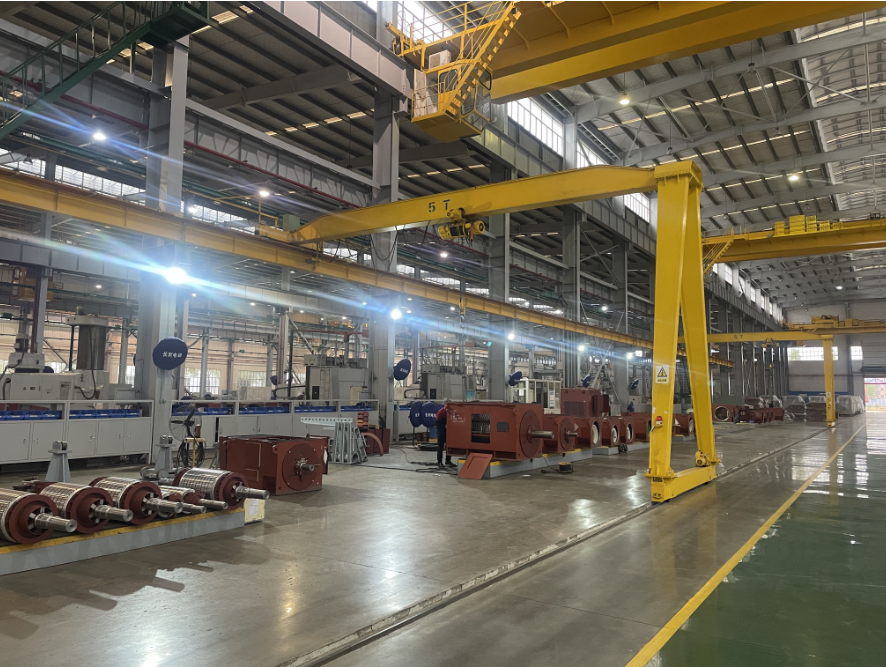
Under the background of national policy support and the requirements of the actual situation, it is also necessary for the motor industry, which is a member of the manufacturing industry, to pay attention to and develop automated production.
Moreover, with the advent of the smart era, smart cars, smart hardware, smart factories, and smart homes will become new market drivers. The motor of the intelligent era has put forward higher requirements for the precise control of speed, position and torque. Therefore, most motor companies in China need to solve the technical backwardness of drive and control as soon as possible, use the latest material technology to improve product quality, and use Automated production to improve product quality to provide products that meet the needs of the times.

Products have been exported to the United States, Russia, Sudan,Indonesia, India, Pakistan, Yemen and other countries.


Copyright © Changsha Changli Electric Co., Ltd.
This site has IPV6 support Powered by www.300.cn ChangSha
SAF Coolest v1.1 设置面板 FPASD-ZSPS-FDASE-ZQA
无数据提示
Sorry,There is currently no content in the current column!
You can view other columns or return to the Homepage